One of the most common questions timberland owners ask is a deceptively simple one: how do I know when my timber is actually ready to harvest?
The answer depends on more factors than most people expect. Species, market conditions, forest health, landowner goals, and site productivity all play into the decision. Harvest too early and you leave money on the table. Wait too long and you risk losing timber value to disease, insects, wind throw, or natural mortality.
This guide will walk you through the key indicators that your timber may be ready, and help you approach the harvest decision with confidence.
Understanding Timber Maturity
Trees grow differently depending on their species and the site they grow on. A Douglas fir on a rich, low-elevation site in the Pacific Northwest may reach harvestable size in 40 to 60 years. The same species on a poor, rocky, high-elevation site might take 80 years or more to reach comparable size.
Timber maturity is not a single threshold. It is better understood as a window, a period during which the trees on your property are generating their maximum value per year of growth. Before that window, your trees are still putting on significant volume and are worth more for every additional year they grow. After it, growth slows, and the risk of loss to natural causes begins to outweigh the benefit of waiting.
The goal of good timber management is to identify that window and harvest within it.
Key Signs Your Timber May Be Ready
1. Crown Closure and Competition Stress
Walk through your forest and look up. If the canopy is so dense that very little light reaches the forest floor, your trees are competing heavily for resources. You will notice slower diameter growth on individual trees, crown recession (where the live crown starts from higher and higher on the trunk), and increased mortality of smaller trees in the understory.
This is one of the clearest signs that your stand is ready for at minimum a thinning harvest. Relieving that competition by removing select trees gives the remaining stand room to grow and recover.
2. Diameter Growth Has Slowed
One of the most reliable measures of timber readiness is the rate of diameter growth. This is measured in growth rings, visible on any cut stump or core sample. When rings are wide and evenly spaced, the tree is growing vigorously. When rings become narrow and tightly compressed near the outer edge of the trunk, growth has stalled.
A professional forester or experienced logging contractor can assess diameter growth quickly and give you a realistic picture of where your stand is in its growth cycle.
3. Increasing Natural Mortality
If you are finding more dead or dying trees on your property than in previous years, that is a signal worth paying attention to. Natural mortality in an overstocked stand accelerates as trees compete for limited resources. Some level of mortality is normal, but a rising rate means your forest is self-thinning, and you may be losing timber value that a harvest could have captured.
Dead standing timber, called snags, also becomes a fire hazard and loses structural integrity over time, making it harder and more dangerous to harvest later.
4. Pest and Disease Pressure
Bark beetles, root rot, Swiss needle cast, laminated root rot, and a range of other pests and pathogens target stressed and mature timber. If you are noticing increased beetle activity, crown discoloration, or unusual levels of windthrow, these can all be signs that your stand is vulnerable.
Harvesting before a pest or disease outbreak reaches critical levels can save a significant portion of your timber’s value. Once trees are killed by insects or pathogens, their value drops sharply and in some cases disappears entirely.
5. Market Conditions Are Favorable
Timber prices fluctuate based on housing markets, lumber demand, mill capacity, and regional supply. While you should never make a harvest decision based purely on short-term market swings, favorable market conditions are a legitimate factor in timing.
If your timber is within the maturity window and prices are strong, that combination represents a good opportunity. Conversely, if your trees still have significant growth ahead of them, it rarely makes sense to harvest early just to capture a temporary price spike.
The Role of a Forest Management Plan
If you own timberland and do not have a current forest management plan, creating one is the single most valuable step you can take. A forest management plan is a written document, typically prepared with the help of a licensed forester, that inventories your timber, maps your property, identifies management objectives, and lays out a harvest schedule.
Many states offer cost-share programs that partially fund the development of forest management plans for private landowners. These plans also unlock certain tax advantages and can simplify the permitting process when harvest time comes.
A good forest management plan removes the guesswork from the harvest decision. You will know your stand’s volume, its growth trajectory, and the optimal harvest timing for every zone on your property.
Getting a Timber Cruise Done
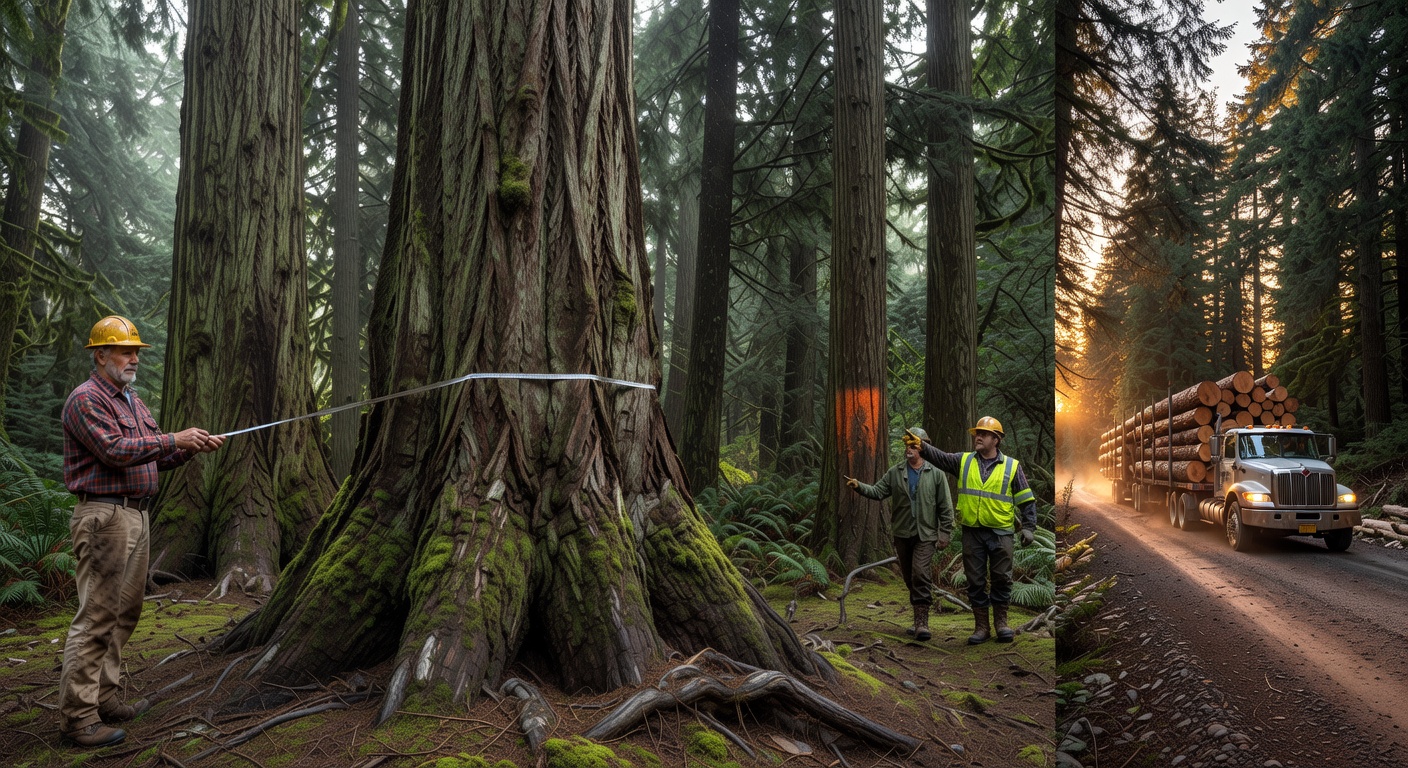
Before committing to a harvest, it is worth having a timber cruise completed. A timber cruise is a systematic sampling of your forest that estimates the volume, species composition, and quality of timber on your property. It gives you and your logging contractor a factual foundation for planning the harvest and negotiating timber prices.
At Ridgeback Logging Co., we can walk your property and help you assess harvest readiness in practical terms. We work with landowners at every stage, from those considering their first harvest to those managing active long-term timber programs.
What Happens If You Wait Too Long?
Many landowners hold off on harvesting out of caution or sentiment, which is understandable. But waiting too long has real costs.
Overmature timber is more susceptible to heart rot, a fungal decay that hollows out the center of the trunk and reduces structural grade. Trees affected by heart rot may still look healthy on the outside but yield far less usable lumber than their size would suggest.
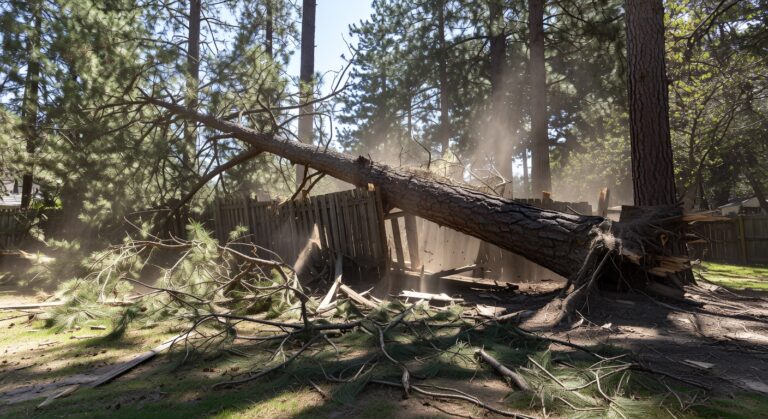
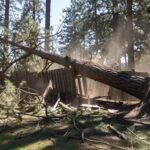
Wind throw risk also increases in overmature stands. Large old trees with compromised root systems are more likely to blow down in storms, and a single windstorm can destroy years of carefully managed timber value in hours.
Finally, harvesting overmature or declining timber is more complex and expensive than harvesting healthy, mature stands. The equipment risk is higher, crew safety is a greater concern, and the logistical challenges multiply. Timely harvesting is not just about maximizing value; it is also about managing the harvest safely and cost-effectively.
Next Steps for Landowners
If you suspect your timber is approaching or within its harvest window, here is a simple action plan.
Schedule a property walk with an experienced logging contractor or forester. Review any existing management documentation you have on the property. Consider commissioning a timber cruise to establish baseline volume data. Discuss your goals openly so the harvest plan reflects what matters most to you.
At Ridgeback Logging Co., we approach every consultation honestly. We will tell you what we see on your land, give you our professional assessment of harvest readiness, and help you make a decision that is right for your forest and your financial goals. Reach out today to get started.