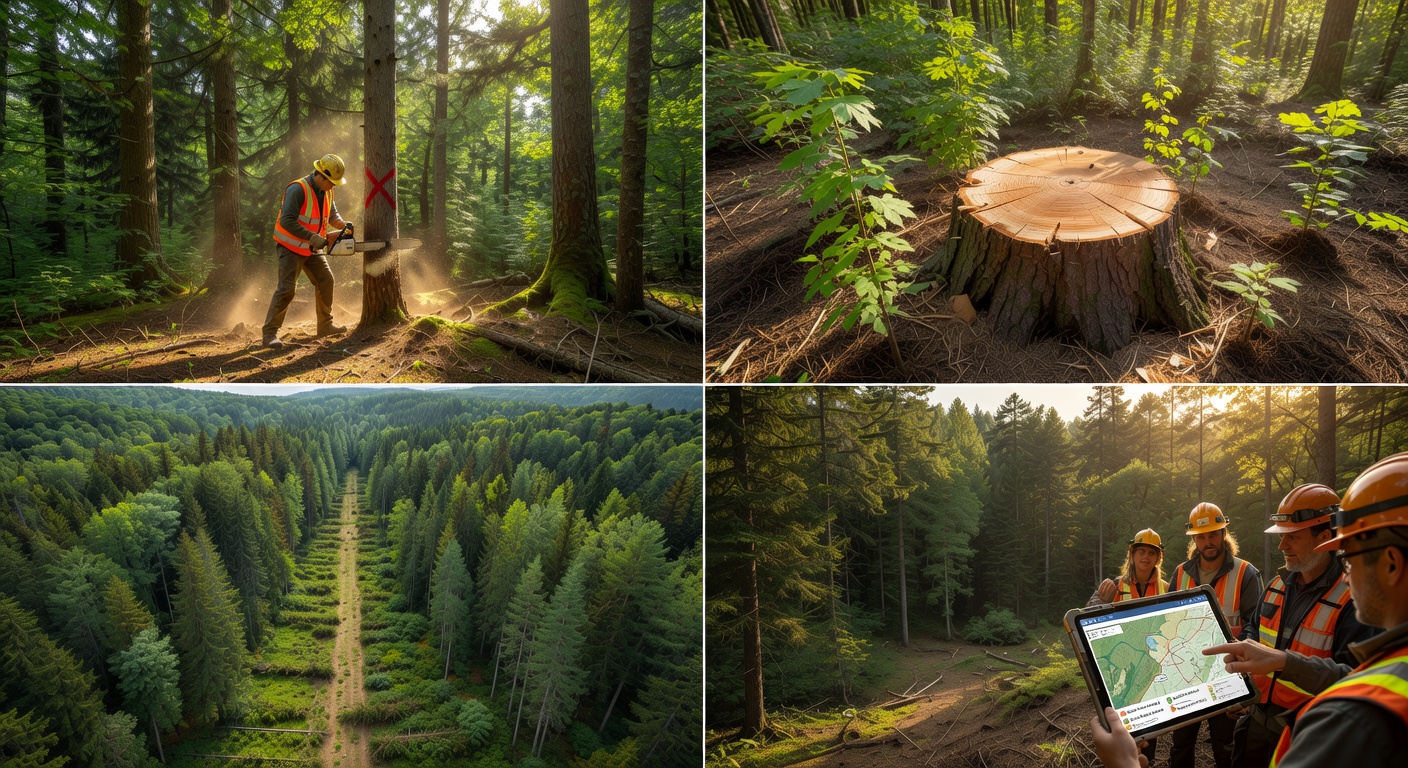

Owning timberland comes with real responsibility. The decisions you make about how and when to harvest can shape the health of your forest for decades. Selective timber harvesting is one of the most effective tools available to landowners who want to generate income from their land without sacrificing its long-term value.
At Ridgeback Logging Co., selective harvesting is at the core of what we do. This article breaks down what it is, how it works, and why it is consistently the smarter choice for landowners who think beyond the next haul.
What Is Selective Timber Harvesting?
Selective timber harvesting is the practice of removing specific trees from a forest while leaving the surrounding stand largely intact. Rather than clearing an entire area, a trained logging crew identifies which trees to cut based on maturity, species, health, spacing, and the long-term goals of the landowner.
This stands in contrast to clear-cutting, where every tree in a designated area is removed regardless of age or health. While clear-cutting has its place in certain reforestation strategies, it is not the right fit for most private landowners who want to maintain a living, productive forest.
Selective harvesting is guided by a forest management plan, which maps out which zones to harvest, which species to prioritize, and how to protect regeneration. The goal is always to leave the forest better than you found it.
Why Tree Selection Matters
Not every tree is worth the same to your forest or your bottom line. Older, mature trees with high timber value are prime candidates for harvest. Trees that are diseased, structurally compromised, or overcrowded may also be removed to improve the health of neighboring trees.
When too many trees compete for the same light, water, and nutrients, all of them suffer. Removing the right ones opens up the canopy, allowing younger growth to take hold and thrive. This process, called thinning, is one of the most valuable services a logging crew can provide.
Proper selection also means protecting high-value species. In many Pacific Northwest forests, Douglas fir, western red cedar, and hemlock grow alongside less valuable species. A skilled crew knows which trees to protect and which to prioritize for harvest to maximize the long-term return on your land.
How the Process Works
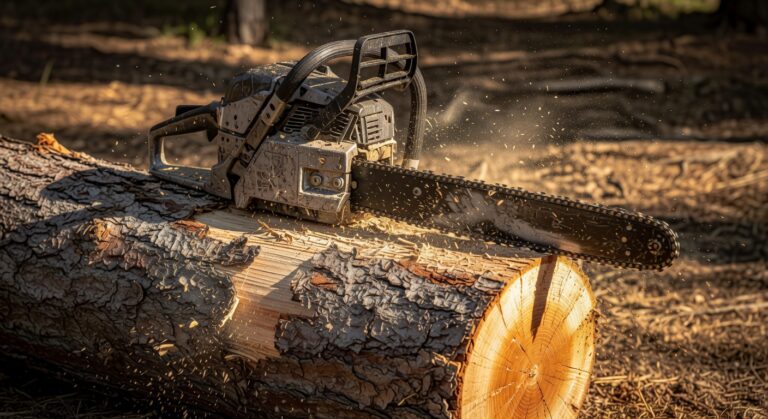
Selective timber harvesting begins long before any chainsaw starts. The first step is a thorough assessment of your property. At Ridgeback Logging Co., we walk your land with you, review your goals, and develop a clear plan before a single tree is marked.
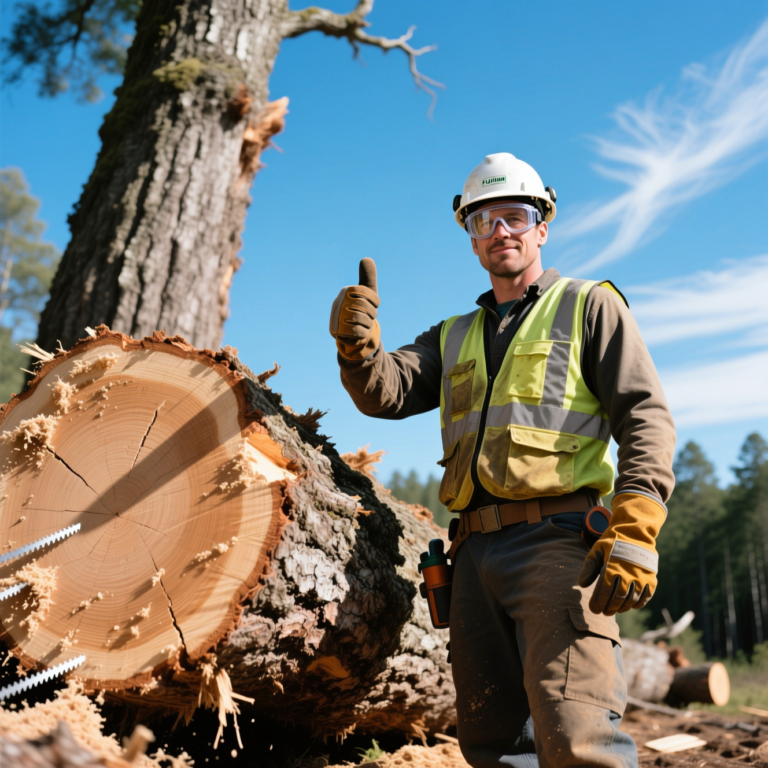
Once the plan is in place, trees are marked for harvest using paint or flagging tape. The crew then works methodically through the designated zones, cutting and removing marked trees while carefully protecting the remaining stand.
Equipment selection plays a major role in minimizing damage. We use appropriately sized machinery for your terrain and take deliberate care with skid trails, the paths used to drag logs out of the forest. Poorly planned skid trails cause soil compaction and root damage to surrounding trees. Our crews map these routes before work begins to limit their footprint.
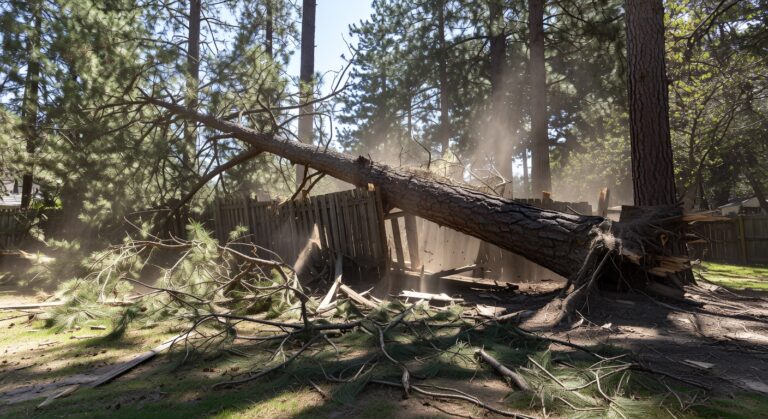
After the harvest, slash (branches and treetops left behind) is managed to reduce fire hazard and promote decomposition, which returns nutrients to the soil. In some cases, slash is processed for biomass or left strategically to provide wildlife habitat.
The Long-Term Benefits for Landowners
The benefits of selective harvesting extend well beyond the immediate value of the timber you sell.
Improved Forest Health: Removing overcrowded or diseased trees reduces competition and lowers the risk of pest infestations and disease spread. A thinned, well-managed forest is a more resilient one.
Sustained Timber Income: A forest managed with selective harvesting can be harvested on a rotating cycle. Rather than a one-time clear-cut followed by decades of waiting for regrowth, selective management allows you to generate income from the same land repeatedly over your lifetime.
Wildlife Habitat Preservation: Leaving a healthy forest canopy in place protects the understory and provides continued habitat for birds, deer, and other wildlife. Many landowners value their timber property as much for recreational and ecological purposes as for its financial return.
Erosion Control: Keeping the majority of your forest intact means roots continue to hold soil in place. This is especially critical on slopes, near waterways, and in areas with heavy seasonal rainfall. Clear-cutting on steep terrain can trigger landslides and send sediment into streams.
Property Value: A well-managed timberland consistently holds or grows in value. Buyers and appraisers look favorably on properties with active forest management plans and a demonstrated history of responsible harvesting.
Common Misconceptions About Selective Harvesting
Some landowners worry that any harvesting will damage their forest. This is understandable, but a well-executed selective harvest leaves your property in better shape than before the crew arrived. The key word is well-executed. Hiring an experienced, licensed logging contractor who understands forest management principles makes all the difference.
Others assume that harvesting less timber means earning less money. That is not necessarily true. Quality mature timber commands strong prices, and a focused selective harvest of high-value trees can generate significant returns without the ecological and financial cost of full clear-cutting.
Finally, some landowners believe their forest is too small to be worth managing. In reality, even a 20 or 30-acre woodlot can benefit from selective thinning, both for health and for modest ongoing income.
Choosing the Right Logging Partner
Not all logging companies approach the work the same way. When evaluating contractors for selective timber harvesting, look for these qualities.
A clear written forest management plan before work begins. Detailed knowledge of local species, terrain, and seasonal conditions. Experience with low-impact logging techniques and equipment. Transparent communication about what will be removed, what will remain, and why. A track record of completed projects you can visit or verify.
At Ridgeback Logging Co., we bring all of this to every job. We work with landowners across the region who want to harvest their timber thoughtfully, protect their investment, and leave their land in great shape for future generations.
Getting Started
If you own timberland and are thinking about harvesting, the best first step is a site visit. Walking the property with an experienced logging contractor gives you a realistic picture of what your forest holds, what it needs, and what a responsible harvest could look like.
Contact Ridgeback Logging Co. to schedule a consultation. We will assess your land, answer your questions honestly, and help you build a plan that works for your goals and your forest.